



In today’s fast-paced lifestyle, the idea of changing outfits multiple times a day feels almost unrealistic. Most of us move from morning meetings to afternoon errands and sometimes straight into evening plans without a pause. That’s where versatile dressing becomes not just a style choice, but a practical strategy.
The goal isn’t to own more clothes—it’s to own smarter ones. Pieces that adapt, evolve, and shift with your day. Let’s break down how to build a wardrobe that works as hard as you do.
Why Versatile Dressing Matters Today
Modern life is unpredictable. One moment you’re in a coffee shop taking calls, the next you’re at a dinner reservation you almost forgot about. Clothing that adapts to different settings reduces stress and decision fatigue.
More importantly, versatile dressing helps you develop a consistent personal style. Instead of dressing for separate identities—work you, weekend you, evening you—you create a unified aesthetic that feels natural in every setting.
Think of it as style efficiency: fewer decisions, better outcomes.
Building the Foundation of a Versatile Wardrobe
A versatile wardrobe doesn’t start with trends. It starts with structure.
Neutral Basics That Work Anytime
Neutral colors like black, white, beige, navy, and olive form the backbone of flexibility. Why? Because they mix effortlessly without clashing.
Essential basics include:
- Plain fitted T-shirts
- Crisp button-down shirts
- Straight-leg jeans
- Lightweight knit sweaters
These items act like building blocks. You can dress them up or down depending on context.
The Role of Fabric and Fit
Fabric determines perception. A cotton T-shirt feels casual, but a silk-blend or structured knit elevates instantly. Similarly, fit changes everything.
Well-tailored clothing naturally leans more polished, even if the item itself is simple. Oversized silhouettes, when styled intentionally, can also shift between relaxed and refined.
Key Pieces That Transition Seamlessly
Certain wardrobe items are naturally adaptable. These are your “workhorses.”
The Classic Blazer
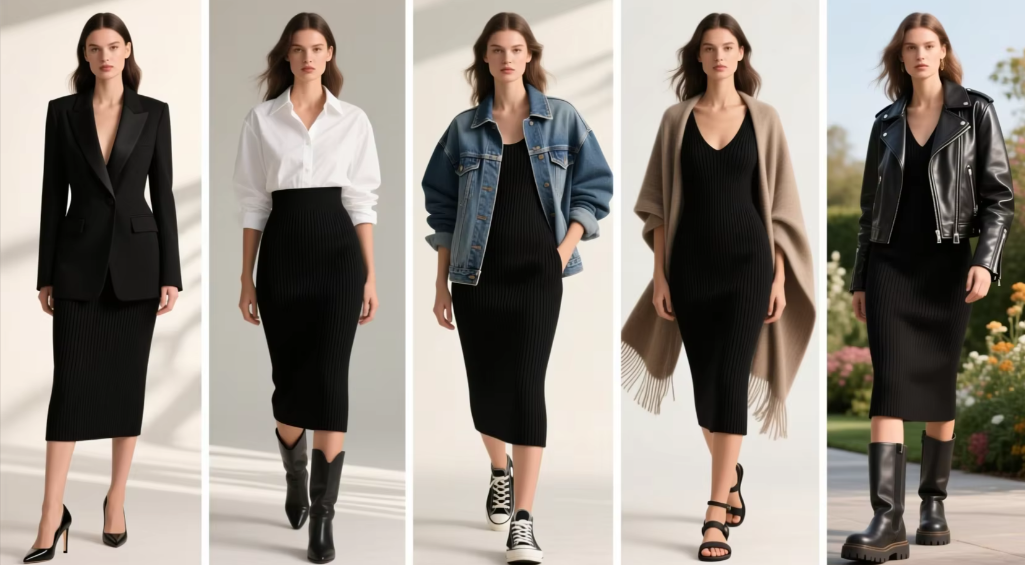
A blazer is arguably the most powerful transitional piece. Worn over jeans, it feels smart-casual. Paired with trousers, it becomes professional. Thrown over a dress, it adds structure for evening wear.
It’s the definition of controlled versatility.
The Midi Dress
A midi dress works across environments with ease. During the day, pair it with sneakers and a tote bag. At night, switch to heels and statement jewelry.
The same garment, two completely different moods.
Tailored Trousers
Tailored trousers are the middle ground between formal and relaxed. With a T-shirt, they feel effortless. With a blouse or blazer, they become office-ready.
They’re especially powerful because they anchor an outfit instantly.
Minimal Sneakers vs. Heels
Footwear is often the fastest transformation tool.
- Sneakers = relaxed, approachable, casual energy
- Heels = structured, elegant, elevated presence
Simply changing shoes can redefine your entire outfit narrative.
Day-to-Night Outfit Transformation Strategies
Let’s move from theory to execution.
Layering Techniques
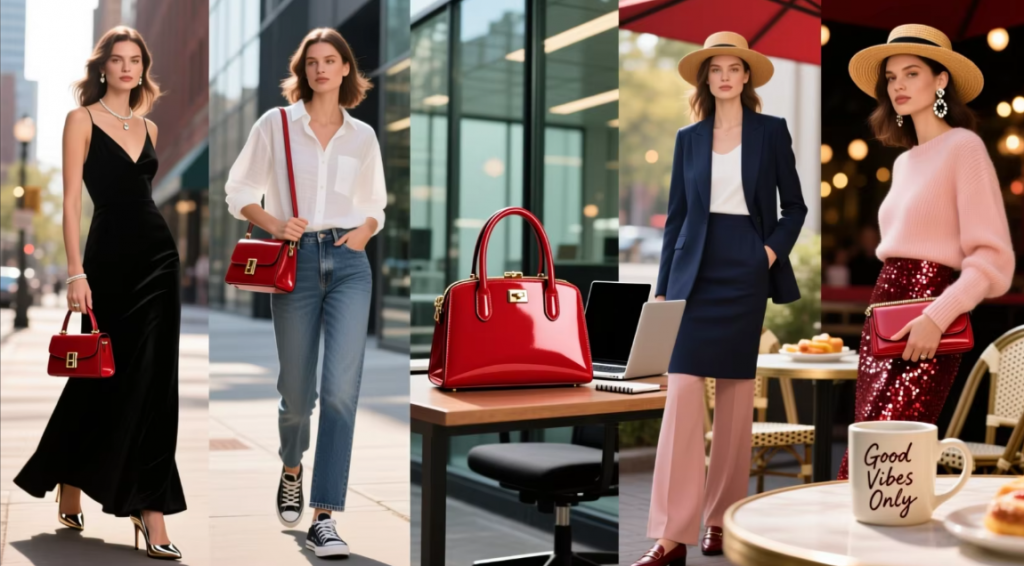
Layering allows you to adapt without fully changing clothes. A tank top under a blazer can transition from daytime casual to evening sophistication by simply removing or adding the outer layer.
Lightweight scarves, cardigans, and jackets play a similar role.
Accessorizing for Impact
Accessories are transformation tools disguised as details.
- Minimal jewelry for daytime professionalism
- Bold earrings or layered necklaces for evening energy
- Structured handbags vs. clutches
Small changes create big visual shifts.
Makeup and Grooming Adjustments
Even subtle makeup adjustments can shift your entire look. A soft daytime appearance can become evening-ready with deeper lip tones or defined eyeliner.
For men, grooming changes like restyling hair or adding fragrance depth can achieve similar transitions.
Seasonal Considerations for Versatile Dressing
Versatility isn’t static—it changes with weather.
Spring & Summer Styling
Light fabrics like linen and cotton dominate here. Breathability is key, but layering still matters. A light blazer or overshirt is your best friend for temperature shifts.
Fall & Winter Layering
Cold seasons emphasize structure. Think coats, knitwear, scarves, and boots. The goal is not just warmth but layered depth, which naturally enhances outfit flexibility.
Common Styling Mistakes to Avoid
Versatile dressing can go wrong when overcomplicated.
Common mistakes include:
- Over-accessorizing during transitions
- Choosing overly trendy pieces that lack longevity
- Ignoring fit in favor of aesthetics
- Mixing too many conflicting styles in one outfit
Simplicity often creates the most adaptable results.
Real-Life Outfit Scenarios
Theory becomes useful when applied.
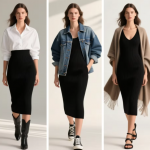
Workday to Dinner Transition
Start with tailored trousers, a blouse, and flats. For evening, swap flats for heels, add earrings, and replace a tote with a structured bag.
Casual Brunch to Evening Event
A midi dress with sneakers works for brunch. Switch to heels, add a belt, and layer a blazer for an evening-ready look.
These transitions take minutes, not hours.
How to Build Your Own Capsule Wardrobe
A capsule wardrobe is the ultimate expression of versatility.
Start with:
- 5–7 tops
- 3–5 bottoms
- 2–3 outerwear pieces
- 2–3 pairs of shoes
Focus on compatibility. Every piece should work with multiple others. The more combinations possible, the more efficient your wardrobe becomes.
Conclusion
Versatile dressing isn’t about having more clothes—it’s about having the right ones. When your wardrobe is built on adaptable foundations, your daily routine becomes simpler and more intentional.
The key takeaway is control: you decide how an outfit behaves, not the other way around. With thoughtful basics, smart layering, and intentional accessories, moving from day to night becomes effortless.
Practical next step? Audit your wardrobe. Identify pieces that already transition well, and build around them instead of constantly adding new items.
FAQs
1. What does “day to night outfit” mean?
It refers to clothing that can be styled differently for daytime activities and evening events without needing a full outfit change.
2. What are the most versatile clothing items?
Blazers, midi dresses, tailored trousers, neutral T-shirts, and minimalist shoes are among the most adaptable pieces.
3. How can I make a casual outfit look more formal quickly?
Add structured layers like a blazer, switch to heels or polished shoes, and upgrade accessories such as bags or jewelry.
4. Do I need an expensive wardrobe to dress versatile?
No. Versatility depends more on selection and styling than price. Even budget-friendly basics can be highly adaptable.
5. What is a capsule wardrobe and why is it useful?
A capsule wardrobe is a curated set of interchangeable clothing pieces designed to maximize outfit combinations while minimizing clutter.